



Texas summer electricity bills have a way of arriving like bad news. Cooling accounts for the majority of household energy use here, often more than half of a summer bill, and the instinct when the number climbs is to raise the thermostat and suffer. That is the least effective option available to you.
Most Texas homes waste energy in ways that have nothing to do with how cold you keep the house. Air leaks into a 130-degree attic. Ducts that lose a quarter of what they carry. A filter throttling the blower. A system that was oversized on the day it was installed. Fix those, and you can hold the same temperature for meaningfully less money.
Here are fifteen changes, ordered roughly from free to significant investment.
Free and Nearly Free
1. Change the Filter on Schedule
A clogged filter restricts airflow, which forces the blower to work harder, reduces cooling capacity and can freeze the evaporator coil. In Texas dust and pollen conditions, a one-inch filter often needs replacing every 30 to 60 days. Thicker four- or five-inch media filters typically last six months to a year.
One caution: a filter that is too restrictive causes the same problem it is meant to solve. Very high MERV ratings on a system not designed for them starve airflow. MERV 8 to 11 is the practical range for most residential equipment.
2. Set the Thermostat Higher — and Leave It Alone
Every degree you raise the setpoint saves roughly 3 to 5 percent on cooling. Moving from 72 to 76 is often a 15 to 20 percent reduction.
More importantly, stop adjusting it constantly. Setting it to 65 does not cool the house faster — the system produces the same output regardless of how far the setpoint is from the current temperature. All you achieve is overcooling and a bigger bill.
3. Run Ceiling Fans in Occupied Rooms
Moving air makes skin feel about four degrees cooler than still air at the same temperature, which lets you raise the thermostat without losing comfort. Fans cool people, not rooms, so turn them off when you leave. Blades should turn counter-clockwise in summer.
4. Close Blinds on Sun-Facing Windows
West-facing glass in a Texas afternoon is a significant heat source. Closing blinds or curtains during peak sun hours cuts solar gain substantially at no cost.
5. Move Heat-Producing Activities to Evening
Ovens, dryers and dishwashers dump heat into the house at exactly the wrong time. Shifting them past 8pm reduces peak cooling load, and on a time-of-use electricity plan it also moves consumption to cheaper hours.
6. Clear Around the Outdoor Unit
The condenser rejects your home’s heat to outdoor air, and it cannot do that if it is packed with grass clippings and hemmed in by shrubs. Keep two feet clear on all sides and rinse the fins gently with a garden hose — never a pressure washer, which flattens them.
7. Keep Vents Open and Unblocked
Closing vents in unused rooms does not save money on a conventional system. It raises static pressure, strains the blower, and can cause duct leakage to increase. Furniture and rugs over floor registers do the same thing more quietly.
Modest Investments With Fast Payback
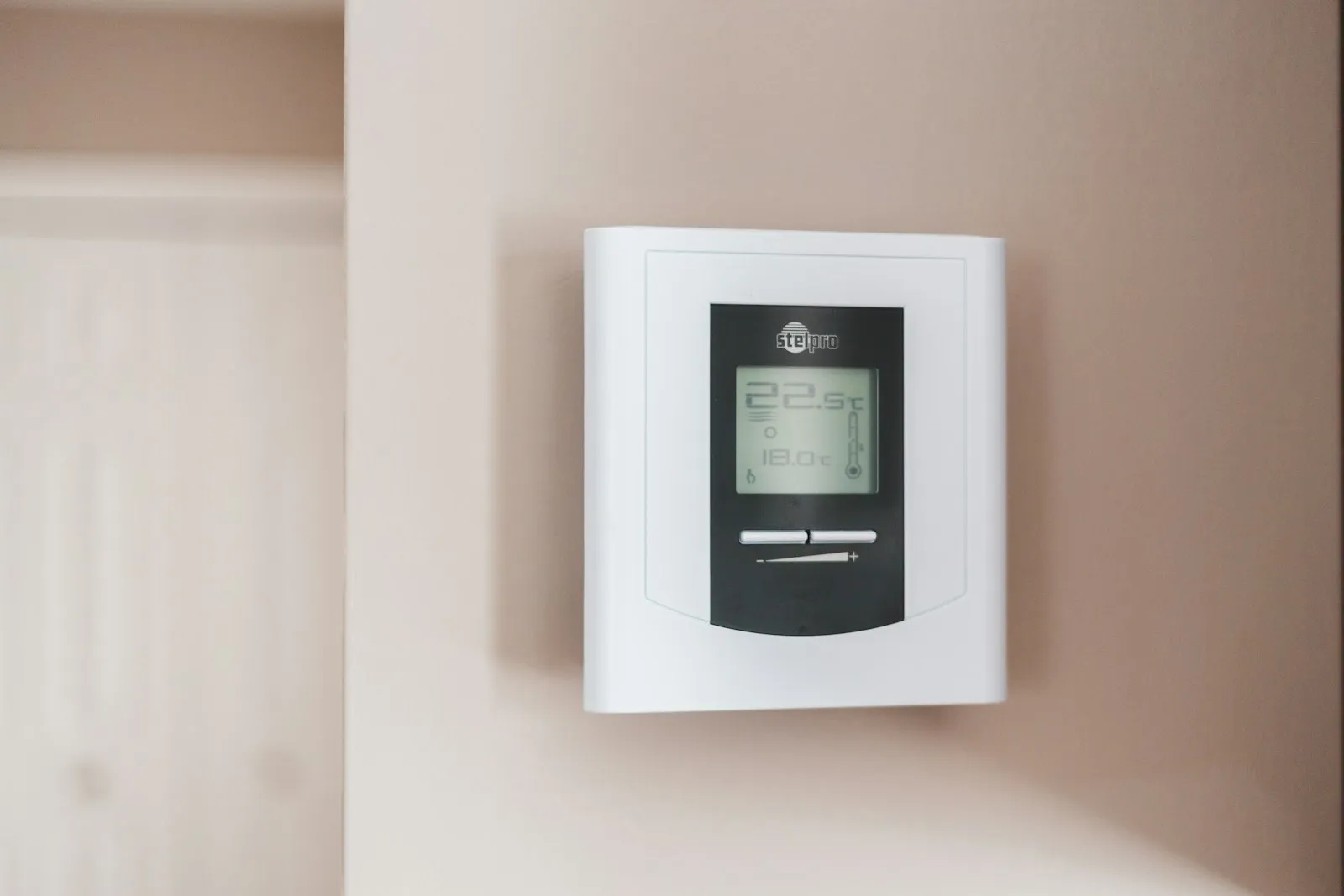
8. Install a Programmable or Smart Thermostat
Cooling an empty house is pure waste. A programmable thermostat that raises the setpoint while you are at work and brings the house back before you return typically saves 8 to 12 percent on cooling. Smart thermostats add geofencing and usage reporting, and many Texas utilities offer rebates on them.
9. Seal Air Leaks
The usual culprits are gaps around recessed lights and attic hatches, plumbing and wiring penetrations, the gap between the top plate and drywall, and door and window frames. Caulk and expanding foam are inexpensive, and a weekend of sealing frequently produces a visible change in the next bill.
10. Add Weatherstripping to Doors
If you can see daylight under an exterior door, you are cooling the outdoors. Door sweeps and weatherstripping cost very little and install in minutes.
11. Insulate the Attic Hatch
Almost universally overlooked. The attic hatch is often a thin uninsulated panel sitting between your conditioned home and a 130-degree attic. A rigid foam panel and a weatherstrip gasket cost a few dollars.
The Big Wins
12. Seal and Insulate the Ductwork
This is the highest-impact item on the list for most Texas homes. Typical ducts leak 20 to 30 percent of the air passing through them, and because those ducts usually run through a superheated attic, every leak is a direct loss. Sealed and properly insulated ducts can cut cooling costs 10 to 20 percent on a leaky system — often more than a new air conditioner would.
Proper duct sealing uses mastic or UL-listed foil tape, not cloth duct tape, which dries out and fails. See our duct work installation and duct design services.
13. Add Attic Insulation
Most Texas attics are under-insulated relative to what the climate justifies. The Department of Energy recommends roughly R-38 to R-60 for this region, and plenty of older homes sit closer to R-19. Topping up insulation is straightforward, relatively inexpensive per square foot, and works year-round. Our blown insulation service covers this.
14. Get Annual Professional Maintenance
A system with dirty coils, an incorrect refrigerant charge and degraded airflow can consume 20 percent more energy than the same system in proper condition, while cooling less. Annual service is the cheapest efficiency intervention available to most homeowners because it restores performance you already paid for. See our annual maintenance service and our guide to AC maintenance.
15. Upgrade Aging Equipment
If your system is fifteen years or older, it is likely operating around 10 SEER — less than two thirds as efficient as a modern 16 SEER2 unit doing the same job. Replacement is the largest expense on this list and the one with the longest payback, but for genuinely old equipment the savings are real and immediate. Check available promotions and financing options before deciding.

Where the Money Actually Goes
It helps to see the rough proportions. In a typical Texas home, cooling is around 50 to 60 percent of the summer bill, water heating 12 to 15 percent, appliances and electronics 15 to 20 percent, and lighting under 10 percent.
That distribution explains why HVAC and building-envelope improvements dominate this list. Switching every bulb in the house saves real money, but it cannot compete with fixing ducts that leak a quarter of your conditioned air into the attic.
A Word on Humidity
Along the Gulf Coast, comfort is as much about moisture as temperature. Air at 78 degrees and 45 percent relative humidity feels considerably more comfortable than air at 74 degrees and 65 percent — which means controlling humidity lets you raise the thermostat without anyone noticing.
Systems that run longer at lower capacity dehumidify far better than oversized units that blast and shut off. If your house feels clammy despite a low thermostat setting, the problem is latent capacity, not cooling capacity. A whole-home dehumidifier or a variable-speed system may do more for your comfort and your bill than turning the temperature down further.
What Does Not Work
A few popular ideas that do not deliver:
- Closing vents in unused rooms. Raises static pressure and can increase duct leakage.
- Turning the system off entirely while away all day. In Texas heat the house and its contents soak up so much heat that recovery often costs more than maintaining a setback temperature. Set it back 4 to 6 degrees instead of off.
- Covering the outdoor unit in summer. It needs airflow to reject heat.
- Buying the highest MERV filter available. Restricts airflow on systems not designed for it.
- Refrigerant “top-ups” as routine maintenance. A sealed system does not consume refrigerant. If it is low, there is a leak.
Building a Plan Instead of a Shopping List
Fifteen items is a lot to act on at once, and you do not need to. The sensible order is diagnostic first, envelope second, equipment last.
Start by finding out where you actually stand. A blower door test measures how leaky your house is; a duct leakage test measures how much conditioned air never reaches a room. Together they turn guesswork into numbers. Many Texas utilities subsidize home energy assessments, and some offer them free.
Then fix the shell. Air sealing, attic insulation and duct sealing are the improvements that make every other upgrade work better. They also last for decades with no maintenance and no moving parts. Doing these before replacing equipment has a second benefit worth real money: a tighter, better-insulated house has a smaller cooling load, which means the replacement system can be smaller — and smaller equipment costs less to buy and less to run.
Then address the equipment. Maintenance first, replacement only if the system is genuinely at the end of its life.
Reversing that order is the expensive mistake. Homeowners who install a large new system into a leaky house often end up with an oversized unit that short cycles, never dehumidifies properly, and disappoints them at considerable cost.
Tracking Whether Any of This Worked
Make one change at a time where you can, and compare bills on a like-for-like basis. Raw month-to-month comparison is misleading because weather varies; a cool June and a brutal July are not comparable no matter what you did in between.
Use kilowatt-hours per cooling degree day instead. Cooling degree days measure how hot the month actually was, and most utility bills now report them alongside your usage. Dividing your kWh by the degree days gives a weather-normalized figure that tells you whether your house genuinely got more efficient. If that number falls after you seal ducts, the work paid off — regardless of whether the raw bill went up because August was worse than July.
Smart thermostats and utility portals increasingly graph this for you, and many will show runtime hours as well. A drop in daily runtime at the same setpoint is direct evidence that your cooling load fell.
Frequently Asked Questions
What temperature should I set in summer?
78 degrees while home is the common recommendation, with a setback of 4 to 6 degrees while away. Combine it with ceiling fans and humidity control and most people find it comfortable.
Will a new AC alone fix a high bill?
Not if the ducts leak and the attic is under-insulated. New equipment attached to a leaky distribution system will underperform its rating. Address the envelope first, or at least at the same time.
Are smart thermostats worth it in Texas?
Generally yes, particularly with a long cooling season and an irregular schedule. Many utilities offer rebates that shorten the payback considerably.
How much can these changes actually save?
It varies with the starting condition of the house, but homes that combine duct sealing, added attic insulation, a tuned system and sensible thermostat habits commonly see summer bills drop 20 to 30 percent.
Start With an Assessment
The most efficient path is knowing which of these fifteen items applies to your house. At Vision Air Cooling & Heating, we evaluate the whole picture — equipment, ducts, airflow and humidity — and tell you honestly where your money will do the most good, even when the answer is not new equipment.
Call (832) 680-6210 or request a free estimate.