



Replacing an HVAC system is one of the larger purchases a homeowner makes, and it is usually made under pressure — the old unit has failed, the house is 88 degrees, and someone is asking you to choose between three options you have never had to think about before. This guide is written so you can make that decision calmly, with the Texas climate in mind.
The three realistic choices for most homes here are a conventional split system (air conditioner plus gas furnace), a heat pump, or a dual-fuel hybrid that combines both. Each is genuinely better than the others in specific circumstances, and the right answer depends on your fuel costs, how cold your part of Texas actually gets, and what is already in your house.
The Three Systems, Briefly
Conventional Split System: AC + Gas Furnace
This is the most common setup in Texas. An outdoor condenser handles cooling; an indoor gas furnace handles heating. The two share the same ductwork and blower.
Strengths. Gas furnaces produce genuinely hot air — typically 120 to 140 degrees at the register — so the house warms quickly and feels warm. Heating performance does not degrade as outdoor temperatures fall. Where natural gas is inexpensive relative to electricity, operating costs during a cold snap are low.
Trade-offs. You are maintaining two separate heating and cooling technologies. It requires a gas line, and combustion equipment needs proper venting and annual safety inspection.
Best for. Homes with existing natural gas service, particularly in North Texas where winters are cold enough that furnace performance matters.
Heat Pump
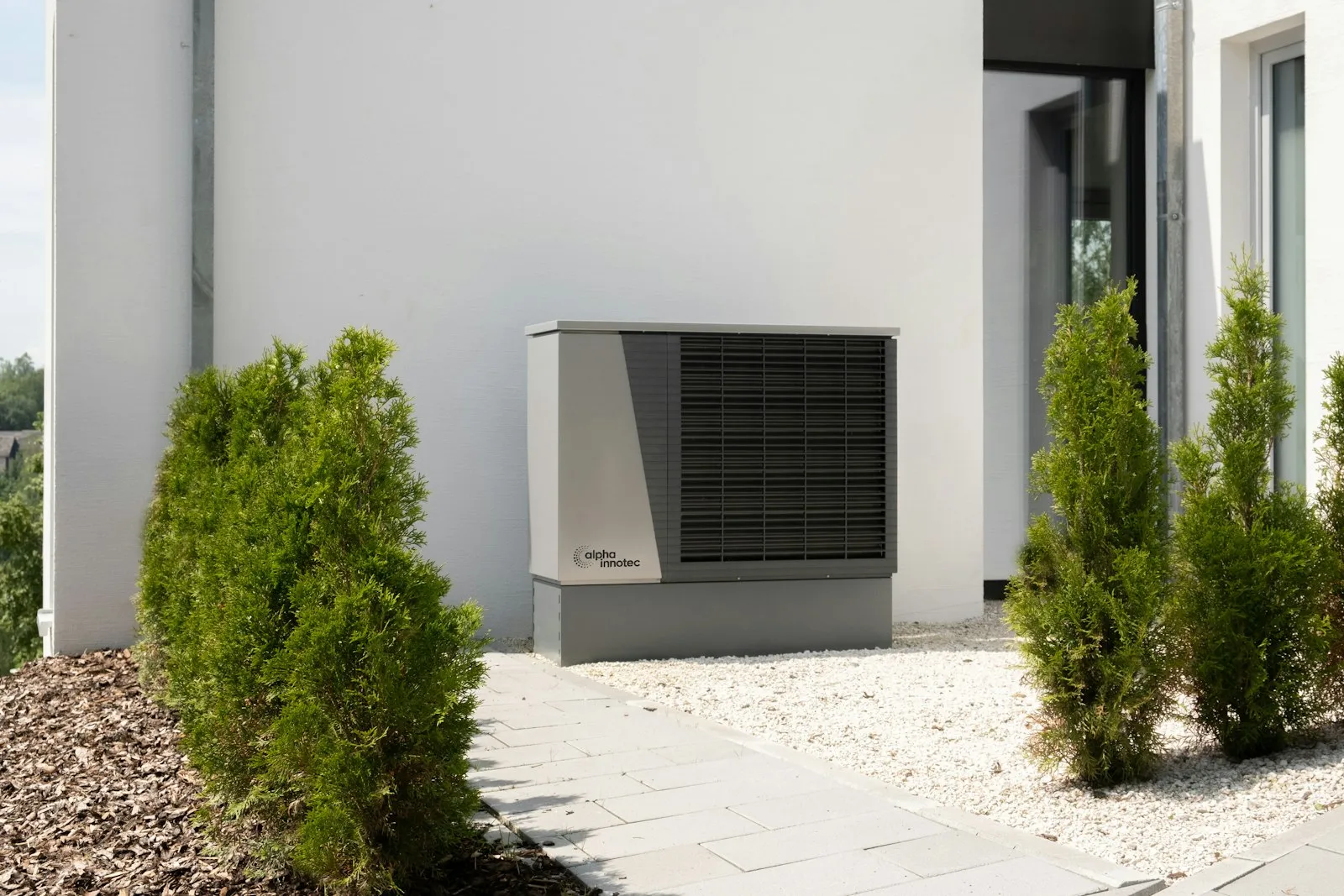
A heat pump is an air conditioner that can run in reverse. In summer it moves heat out of your home; in winter it moves heat from outdoor air into your home. One system, both jobs, all electric.
Strengths. Efficiency is the headline. Because a heat pump moves heat rather than creating it, it can deliver two to four units of heat energy per unit of electricity consumed — something no furnace or electric resistance heater can approach. Modern models perform well down into the twenties and thirties, which covers the great majority of Texas winter hours. No combustion means no gas line, no flue and no carbon monoxide risk.
Trade-offs. Supply air is cooler than furnace air — usually 90 to 100 degrees. It heats the house perfectly well, but standing at a vent it feels less hot, and some homeowners find that unfamiliar. In a genuine hard freeze, the system falls back on electric auxiliary heat, which is expensive to run.
Best for. All-electric homes, and most of Houston, Austin, San Antonio, Victoria and the Coastal Bend, where the cooling season dominates and hard freezes are brief.

Dual-Fuel Hybrid
A hybrid pairs a heat pump with a gas furnace. The control system runs the heat pump for everyday heating and switches to the furnace only when outdoor temperatures drop below a set balance point.
Strengths. You get heat pump efficiency for the mild weather that makes up most of a Texas winter, and furnace output for the handful of genuinely cold days.
Trade-offs. Highest upfront cost, and it needs correct setup — the balance point has to be configured for your actual utility rates, or you lose the advantage.
Best for. Homes with gas service in colder parts of the state, and owners planning to stay long enough to recover the additional investment.
What Actually Matters When Choosing
Your Cooling Load Dwarfs Your Heating Load
This is the point that reframes the decision for most Texans. In Houston you might run cooling for eight months and heating for perhaps six weeks. Optimizing hard for heating performance means optimizing for a small fraction of your annual energy use. Cooling efficiency and dehumidification deserve most of your attention.
Electricity and Gas Prices in Your Area
The economics of gas versus heat pump heating turn entirely on local rates. In a deregulated Texas electricity market with a competitive plan, a modern heat pump is often cheaper to run than a gas furnace. Where gas is cheap and electricity is not, the furnace wins. It is worth doing this arithmetic with your actual bills rather than accepting a general rule.
Whether You Already Have a Gas Line
Adding gas service to a home that does not have it is expensive. If your house is all-electric, a heat pump is almost always the sensible path.
Humidity Control
Along the Gulf Coast this deserves as much weight as raw cooling capacity. A system that cools quickly but does not run long enough to dehumidify leaves a house that is cold and clammy. Variable-speed and two-stage equipment addresses this by running longer at lower output, which pulls far more moisture from the air. If you live anywhere near the coast, ask specifically about latent capacity.
Sizing: The Decision That Matters Most
If you take one thing from this article, take this: a correctly sized system matters more than the brand or the efficiency rating on the box.
Oversizing is the most common installation error in Texas, and it is usually well-intentioned — bigger sounds like better protection against the heat. It is not. An oversized air conditioner cools the air to the thermostat setpoint quickly and shuts off, a pattern called short cycling. Because dehumidification requires sustained runtime, the moisture never leaves. The result is a house at 72 degrees that feels damp and unpleasant, plus higher bills and accelerated compressor wear from constant starting and stopping.
Undersizing has the opposite failure mode: the system runs continuously and still cannot hold temperature during a heat wave.
Correct sizing comes from a Manual J load calculation, which accounts for square footage, ceiling height, window area and orientation, insulation levels, duct location, air infiltration and your local design temperature. It is not a rule of thumb about tons per square foot, and it is not “match whatever was here before” — the old system may well have been wrong.
Any contractor who quotes you a size without measuring your house is guessing with your money.
Understanding Efficiency Ratings
SEER2 measures cooling efficiency across a season. Higher is better. The current federal minimum for the southern region is 14.3 SEER2, and premium equipment reaches the low twenties.
HSPF2 measures heat pump heating efficiency, on the same principle.
AFUE measures what percentage of fuel a furnace converts to usable heat. A 96% AFUE furnace wastes four cents of every fuel dollar up the flue.
A caution about chasing the highest number: in a climate with long cooling seasons, upgrading from 14 to 16 or 17 SEER2 usually pays back sensibly. Going from 18 to 22 costs considerably more for smaller incremental savings, and that money is often better spent on duct sealing, attic insulation or a variable-speed blower. Efficiency ratings are also achieved under laboratory conditions — a 20 SEER2 system installed on leaky ducts will underperform a 16 SEER2 system installed properly.
Do Not Forget the Ductwork
New equipment attached to bad ducts will disappoint you. In Texas the ducts usually run through an attic that reaches 130 degrees or more in summer, which means every leak and every uninsulated section is a direct loss. Typical homes lose 20 to 30 percent of conditioned air through duct leakage.
Before signing off on a replacement, ask whether the ducts have been inspected for leakage, whether they are properly sized for the new equipment’s airflow, whether insulation is intact, and whether the return path is adequate. Duct correction is frequently the highest-return part of the entire project. We cover this in our duct work design and duct cleaning services.
Two Options Worth Knowing About
Ductless Mini-Splits
A ductless mini-split pairs an outdoor condenser with one or more wall- or ceiling-mounted indoor heads, connected by a small refrigerant line instead of ductwork. Because there are no ducts, there are no duct losses — which in a Texas attic is a meaningful advantage.
Mini-splits are the right tool for garage conversions, sunrooms, home offices over a garage, additions the original system was never sized to cover, and any room that has always been five degrees off from the rest of the house. They are also excellent for homes with no existing ductwork at all. Most are heat pumps, so a single head handles that room’s heating and cooling year-round, and each zone has its own thermostat.
The trade-offs are visible indoor heads, a higher per-ton cost than central equipment, and the need for a condensate path from each head.
Zoning a Central System
If your two-story house is comfortable downstairs and hot upstairs, the problem is usually distribution rather than capacity. Zoning divides the ductwork into independently controlled areas using motorized dampers and separate thermostats, so the system sends air where it is actually needed.
Zoning works best when paired with variable-speed equipment that can modulate output as zones open and close. Bolted onto a single-stage system it can raise static pressure and create noise, so the design has to be done deliberately.
Rebates, Tax Credits and Real Costs
High-efficiency equipment often qualifies for federal energy-efficiency tax credits and utility rebate programs, and Texas utilities frequently run seasonal incentives for qualifying heat pumps and air conditioners. These programs change from year to year and have specific efficiency thresholds, so confirm eligibility before you buy rather than after.
When comparing quotes, compare the whole scope, not the headline price. A cheaper bid that omits duct sealing, a new line set, a properly sized return, or a permit is not cheaper — it is smaller. Ask each contractor for an itemized proposal covering equipment model numbers, duct work included, electrical work, permits and inspection, warranty terms for both parts and labor, and the commissioning measurements they will provide at completion. Those documents make the bids genuinely comparable.
When to Repair and When to Replace
Repair is usually right when the system is under twelve years old, the fault is a single component, the repair costs well under a third of replacement, and the unit has otherwise been reliable.
Replacement usually makes sense when the system is fifteen or more years old, the compressor or evaporator coil has failed, the unit still uses R-22 refrigerant (long phased out and expensive to source), repairs are becoming routine, or your bills are climbing while comfort declines.
A useful rule of thumb: multiply the repair cost by the system’s age in years. If the result exceeds the cost of new equipment, replacement is the better investment.
What Good Installation Looks Like
Equipment quality sets the ceiling on performance; installation determines whether you reach it. Insist on a Manual J load calculation, a documented duct evaluation, correct refrigerant charge verified by superheat and subcooling measurement, a properly sealed and supported line set, a correctly pitched condensate drain with a safety switch, and a commissioning report showing measured airflow and temperature split.
Ask to see those numbers. A contractor who measures and documents is a contractor who will stand behind the work.
Frequently Asked Questions
How long should a new HVAC system last in Texas?
With annual maintenance, 12 to 18 years is a reasonable expectation for cooling equipment; furnaces often run longer. Without maintenance, expect the low end of that range or less.
Is a heat pump enough for a Texas winter?
For most of the state, yes. Modern heat pumps hold capacity into the twenties and thirties, and auxiliary heat covers the rare colder hours. In North Texas, a dual-fuel setup is worth pricing.
Should I replace both indoor and outdoor units together?
Almost always. Mismatched components do not achieve their rated efficiency, and pairing a new condenser with an old coil frequently voids warranty coverage.
Does a bigger unit cool better?
No — this is the most expensive misconception in residential HVAC. Oversized systems short cycle, fail to dehumidify, and wear out sooner.
Talk to Someone Who Will Measure First
At Vision Air Cooling & Heating, every replacement starts with a load calculation and a duct evaluation, not a guess. We install systems designed for Texas conditions and back the work with clear guarantees.
Explore our air conditioning and heating services, or see our current promotions. Call (832) 680-6210 or request a free estimate.